Carbon filmColor that stays put
Carbon window tint is the middle film: more color stability than dye, and a lower price than ceramic.
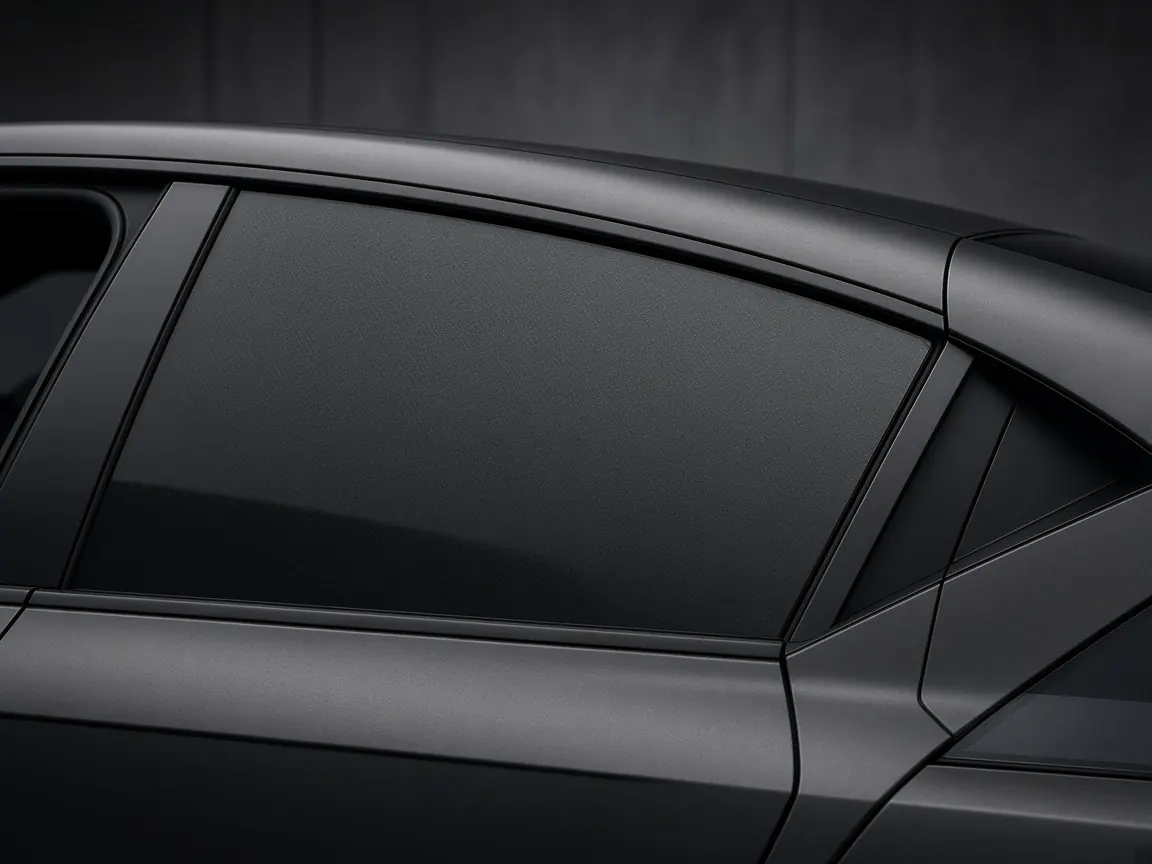
What carbon film is
Carbon automotive window film uses carbon particles instead of a heavy dye load and instead of metal. The tone is a matte charcoal. It does not turn purple the way neglected dye often does, and it does not add a mirror finish.
Cars it fits
Daily drivers, trucks, and SUVs whose owners want a darker, even look and some heat relief without paying the ceramic tier. If heat is the whole reason for the visit, ceramic is the better conversation. If the lowest price is the whole reason, standard film is.
How it differs
Dyed film is cheaper and fades sooner. Ceramic rejects more infrared and costs more. Carbon is the step between them. A three-way look is on the film comparison.
Installation, price, and care
The film is cut, floated on slip solution, and squeegeed. Time tracks the number of panels and whether old film is removed. Cost tracks glass area and that removal. Care is the same cure window: windows up, no early wash, no ammonia, no picking at the edge.
Front side windows still have to read 25% VLT or higher with the factory glass. Carbon does not create an exception.
Related
Questions
Carbon film is non-metallic. Metal films are the ones more likely to affect signals. Carbon is chosen partly to avoid that.
Yes, if the combined meter reading stays at 25% VLT or higher and reflectance stays at 25% or less.
No. Both are non-metallic. Ceramic is built to reject more infrared and usually costs more.
Quote
Get a quote
Tell us the vehicle, the glass, and the film you are considering.