Texas car tint lawsThe meter, the window, the label
Texas car tint laws depend on which window you film. This page summarizes the Texas DPS standards and Transportation Code §547.613. It is not legal advice.
Reviewed on October 26, 2026 against the Texas Department of Public Safety window tinting standards page and the 2025 text of Texas Transportation Code §547.613. The DPS page itself notes a September 4, 2020 update. Rules and inspection practice can change. Confirm with DPS or a qualified attorney before you rely on this for a citation, a sale, or a job.
Official sources: DPS window tinting standards, Transportation Code §547.613, and 37 Texas Administrative Code §21.3.
Visible light transmission
VLT is the percentage of visible light that passes through. Lower is darker. Texas readings are the film and the original glass together. Luminous reflectance is the mirror-like shine. On the windshield and the front side windows, reflectance has to be 25% or less.
Front side windows
Windows immediately to the left and right of the driver need a light transmission of 25% or more and luminous reflectance of 25% or less, over the window. DPS also says front side windows under 25% light transmission fail inspection regardless of model year. Front doors are planned to that line. Five, fifteen, and twenty percent are not front-door offers for a typical Texas passenger car.
Windshield
A sunscreening device on the windshield has to meet all of these points under §547.613: 25% or more light transmission with the windshield, 25% or less reflectance, not red, blue, or amber, and it must not extend downward beyond the AS-1 line or more than five inches from the top, whichever is closer to the top.
DPS adds that a clear, untinted UV film is allowed anywhere on the windshield without a medical exemption. A dark or colored film below the AS-1 line is not a service here.
Rear side windows and the back glass
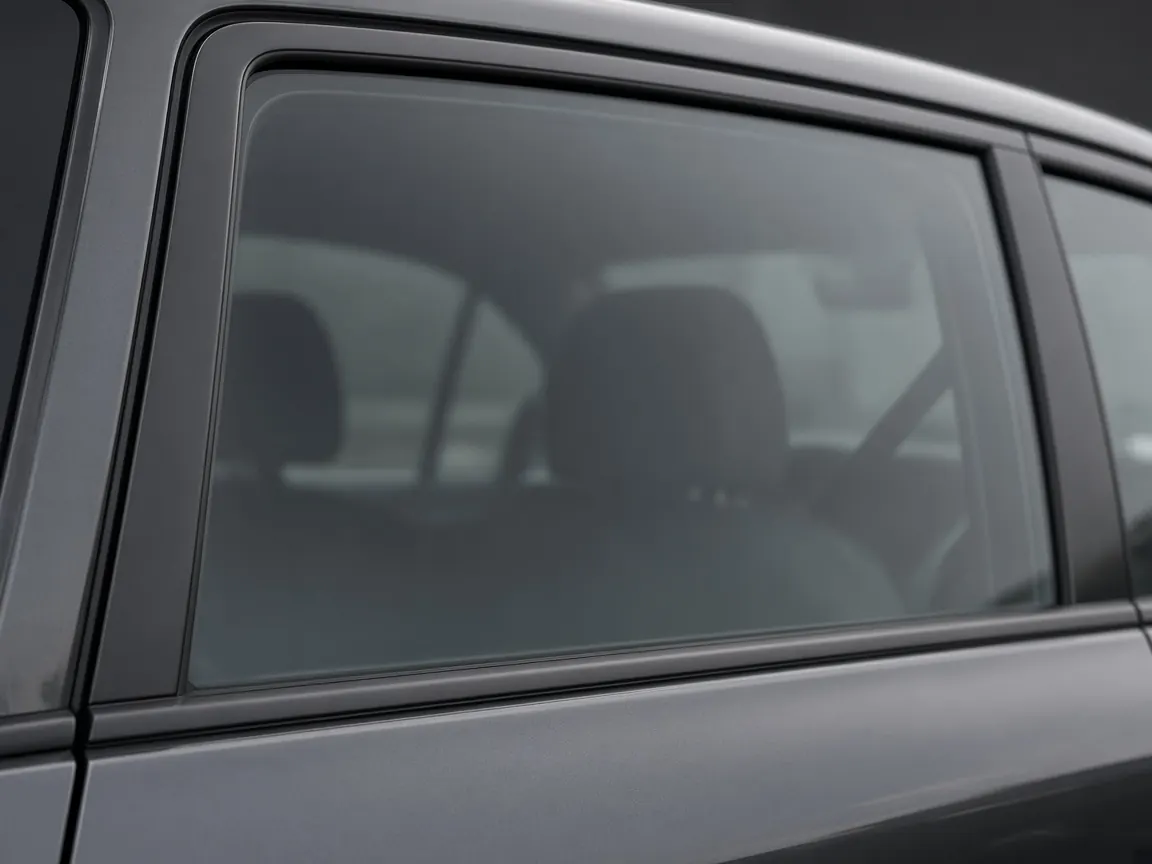
Side windows to the rear of the driver are exempt from the tint limits in the Transportation Code. The rear window is allowed when the vehicle has an outside mirror on each side that shows the driver the highway for at least 200 feet to the rear. That is why rear privacy shades exist on the percentage guide and front-door shades stop at the legal reading.
The label
Section 547.613(a-1) makes it a misdemeanor, with a fine up to $1,000, for an installer to apply film and fail to install a label that complies with §547.609, placed between the film and the glass. The install process includes that label. Read §547.609 for the label’s required contents rather than a paraphrase from a shop page.
Exemptions
The statute also sets aside, among other cases: law-enforcement vehicles used for that work; vehicles regularly used to carry passengers for a fee and authorized by a local license, such as taxis, limousines, and buses; vehicles not registered in Texas; commercial motor vehicles as defined by §644.001; and factory glazing that already meets federal standards.
Medical exceptions are narrower than a blog post usually says. DPS stopped issuing Window Tint Exemption Certificates on January 1, 2019. A driver who needs darker front glass for a medical reason needs a signed statement from a licensed physician or licensed optometrist identifying the driver or occupant and stating that the sunscreening device is necessary. The statement stays in the vehicle. DPS’s inspection notice says a station may pass front side windows, and only the upper windshield, when that documentation is shown — and that passing inspection does not by itself prevent a ticket. The windshield below the AS-1 line or the top five inches, whichever is less, still cannot carry a sunscreening device. The studio does not write medical statements.
What we will install
Front doors at a combined 25% VLT or higher. Rear glass at the darkness you want, within the rear-window mirror rule. A visor strip and clear UV film on the windshield as described above. Red, blue, and amber windshield colors are out. Mirror and chrome film are not on the menu.
If you are choosing a number, start with car tint percentages, then request a quote with the vehicle named.