Tint removalOld film, off the glass
Remove tint from car windows when the dye has turned purple, the corners have lifted, or a new film should not go on top of a failed one.
What removal is
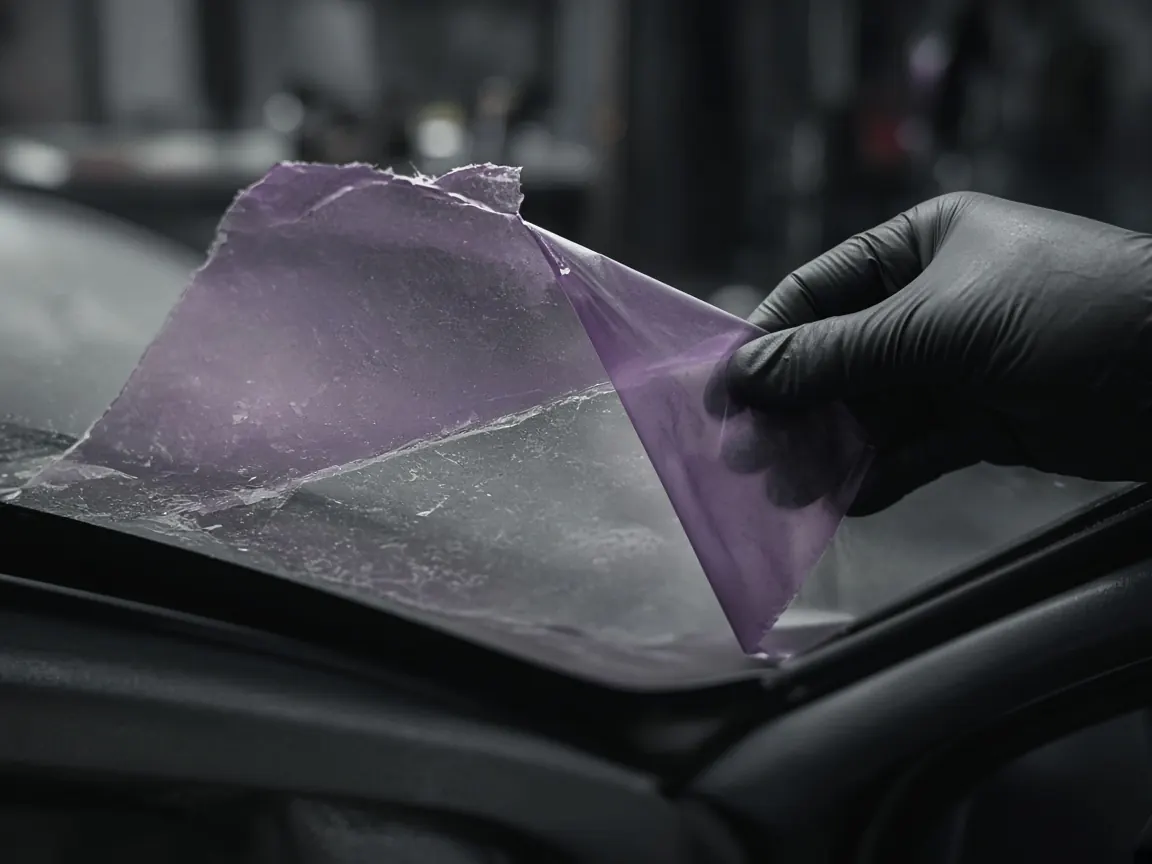
Removal is the work of releasing old film and adhesive from the inside of the glass. It can be the whole visit, or the first half of a replacement.
When it is worth doing
Purple dye, bubbles, haze, a peeled corner, or a shade that will not pass a Texas inspection on the front doors. Film on top of failed film traps the failure. If the current film is flat, even, and legal, removal is optional.
How the shop does it
Heat and a controlled peel lift the sheet. Adhesive left behind is worked off the glass. Rear windows with defroster lines are the slow part: a torn line is a real repair, which is why this page does not include a do-it-yourself recipe. Steaming, blades, and ammonia mixes are easy to get wrong on a defroster.
Price
The cost follows the number of panels, how hard the adhesive is, and whether a defroster is in the way. A recent film usually comes off faster than an old dyed film. The quote is the price.
Afterward
Bare glass can show a little haze until it is cleaned and, if you are refilming, until the new film is down. If you are returning a leased car to stock glass, say that. The lease, not this studio, decides what “original” means.
Related
Questions
Yes. Removal can be the only service.
The point of doing it in a shop is to avoid that. Lines can still be fragile on an old window. We will say so if a panel looks risky.
Often a separate line on the quote. Baked-on dye costs more than a recent film.
Quote
Get a quote
Tell us the vehicle, the glass, and the film you are considering.