Window tint replacementOff with the old, on with the new
Window tint replacement is removal and a new film in one visit. It is the right job when the current film has failed or the film type should change.
What replacement includes
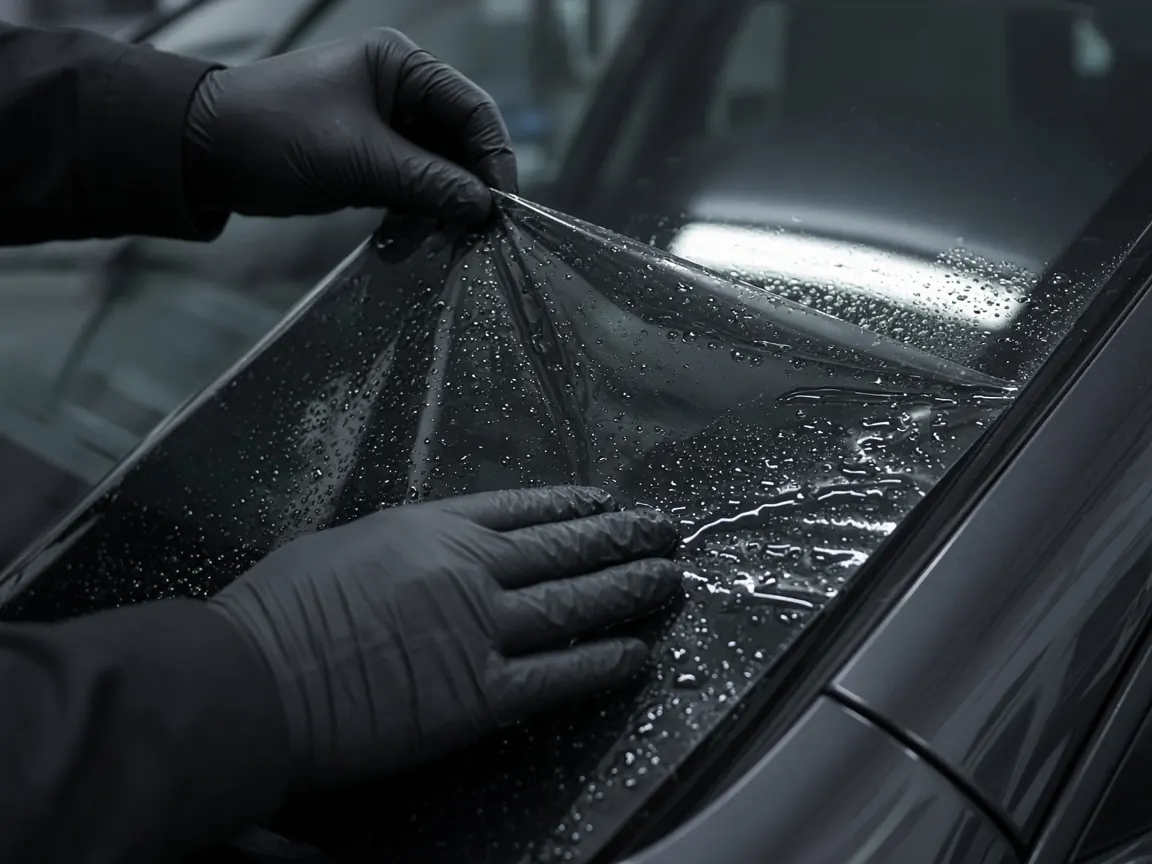
The old film comes off. The glass is cleaned. A new film — ceramic, carbon, or standard — goes on. That is different from removal alone, where you leave with bare glass, and different from a first install on clear glass.
When to replace instead of living with it
The shade has turned purple. Bubbles keep growing. You want heat rejection and the current film is dye. An inspection meter is likely to fail the front doors. If the film is even and you only want a different darkness on the rear, say which panels. Replacing every window is not required.
Choosing the new film
Use the comparison and the percentage guide. Front doors still have to meter at 25% VLT or higher. Rear glass can go darker. The new film does not inherit the legality of whatever was on the car before.
Price and time
You are paying for two jobs: getting the old layer off, and installing the new one. Adhesive that has baked on is the expensive half. Time is longer than a fresh install on the same car. No package price is published here because the condition of the old film is half the quote.
Care after the new film
The cure clock starts over. Windows up, wash later, no ammonia, no edge picking. The old failure does not return if the new film is a ceramic or carbon, unless an edge is lifted during the cure.
Related
Questions
No. Stacking film traps bubbles and makes the next removal harder. Replacement means the first layer comes off.
No. Name the panels. Front doors and rear glass can be different films and different shades.
It is more, because removal is included. The quote splits the two if you want to see them.
Quote
Get a quote
Tell us the vehicle, the glass, and the film you are considering.